The Wines of Italy – Where to Start?
Posted on January 6, 2021 in Education

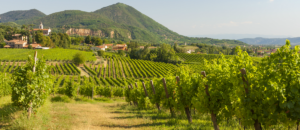
Italian Wine Discovery
You’d be forgiven if you assumed that wine originated in Italy. In fact, it is believed that the origins of wine date back nearly 4,000 years ago to the area that was Mesopotamia. But, while the Greeks may have brought the first vines to Scicly over 3,000 years ago, the Italians have raised the production of wine to an art form. It has one of the most diverse selections of grapes and is the world’s largest producer of wine. With 1.7 million acres of vineyards producing nearly 50 billion litres of wine per year, there is something for every taste.
Reading an Italian wine label can be confusing and overwhelming, but it is key to understanding what to expect in the bottle. There are 20 wine producing regions in Italy and they are governed by an appellation system:
VdT – Vino Da Tavola
(Table Wine)
The most basic classification for the wines of Italy. It is now renamed simply as “Vino”, appearing on labels as Vino d’Italia. This designates wines that reside firmly on the “low end” of the totem pole, comprised of Italian table wines, whose only criteria is that they must be produced somewhere in Italy.
IGT – INDICAZIONE GEOGRAFICA TIPICA
(Typical Geographic Indication)
The wine’s label must declare its specific region and may cite varietal type and vintage. Growers or regional governments are required to apply for IGT status just as they do for a DOC or DOCG appellation.
DOC – DENOMINAZIONE DI ORIGINE CONTROLLATA
(Denomination of Controlled Origin)
A wine with this mark on the label has been produced in a specified area and has been aged and bottled in accordance with existing regulations and under strict control by the Italian Authorities. Along with specifying barrel and bottle aging requirements, this may control min/max production levels, and ABV.
DOCG – DENOMINAZIONE DI ORIGINE CONTROLLATA E GARANTITA
(Denomination of Controlled and Guaranteed Origin)
This category is reserved for elite wines whose quality is “guaranteed” by the Italian Government. These wines can be sold only in bottles not exceeding a certain size and each bottle bears a seal of guarantee.
Vino Nobile di Montepulciano was the first wine designated DOCG, followed by Brunello di Montalcino, also from Tuscany, and Barolo and Barberesco from Piedmont. Chianti became DOCG with the 1984 vintage and Albana de Romagna in 1987. More recently other wines were upgraded: Gattinari and Asti Spumante, from Piedmont, Vernaccia di San Gimignano and Carmignano from Tuscany, Torgiano Reserva and Montefalco Sagrantino from Umbria and Taurasi from Campania.
The appellation system also allows, where applicable, the indication of the name of a sub zone, such as a specific vineyard, farm or estate, or the name of the place of origin, in order to narrow and safeguard even more the quality a specific area having superior quality in respect to the rest of the appellation. This actually is an adaptation of the cru concept used in France.
While these classifications are indicators of wine quality, there are perfectly enjoyable wines in each category. Complicating this is innovation! As producers look to introduce changes in varietals or types of barrels used they can be faced with laws which do not allow higher level classifications. A prime example of this is Antinori Tignello, one of the more sought after “Super Tuscans”. Because of the amount of Cabernet Sauvignon and the barrels used for aging it is only allowed an IGT classification. Hardly an indicator of an inferior wine!
This classification process helps assure consistency in terms of how the wine is made. That, by itself, provides some confidence when comparing wines from the same region but understanding wines produced in each region adds complexity. There are 20 different wine regions in Italy and each, with its own climate, soil composition, and terrain, provides a growing environment for different varietals. While the long growing season in Tuscany may be ideal for Sangiovese, the heat of summer in Sicily would overly stress those vines, but it is ideal for Nero d’Avola.
These 20 regions, listed below, each deserve their own explanation. I hope to provide a deeper dive on some of them over the next few weeks. Stay tuned! Meanwhile, stop by and browse our selection, a few samples are listed below. And as with all wines, find the right occasion – whether a celebratory meal or impromptu picnic, a toast to start an evening or a glass to sip at the end of an evening – there is a time and a place for each. Here at Norfolk Wine & Spirits we take pride in our broad selection of Italian wines and are more than happy to help you select a wine that fits with your plans and your budget.
Recommended Italian Wines:
La Maialina Chianti Classico Riserva 2011 Tuscany
Vignamaggio Gherardino Riserva Chianti 2014 Tuscany
Pio Cesare Barolo 2014 Barolo
Trambusti Brunello di Montalcino DOCG 2014 Tuscany
Giacosa Fratelli Barbaresco 2015 Barbaresco
Tornatore Pietrarizzo Etna Rosso 2016 Sicily
Pojer e Sandri Pinot Nero 2016 Trentino
Travaglini Gattinara 2016 Gattinara
Allegrini Palazzo Della Torre 2016 Veneto
Cantine Colosi Nero d’Avola 2018 Sicily
Gran Passione Rosso Veneto
Ca’ Montini Pinot Grigio Trentino
Italian Wine Regions:
Abruzzo
Aosta Valley
Basilicata
Calabria
Campania
Emilia-Romagna
Friuli-Venezia Giulia
Lazio
Liguria
Lombardy
Marche
Molise
Piedmont [Piemonte]
Puglia
Sardinia
Sicily
Trentino-Alto Adige
Tuscany
Umbria
Veneto
Resources:
Map of Italian Wine Regions
Reading Italian Wine Labels